Busan Station to Ahopsan Forest: Public Transport and Taxi Guide
The workable public-transport route from Busan Station to Ahopsan Forest is Metro Line 1 to Nopo Station, then Gijang village bus 2-3 to Midong Village. From the village stop, follow live walking navigation to the forest entrance at 37-1 Midong-gil. Allow at least 90–120 minutes each way because the village bus is infrequent compared with the subway. For two or more travelers, a taxi from Nopo can be the more practical choice.
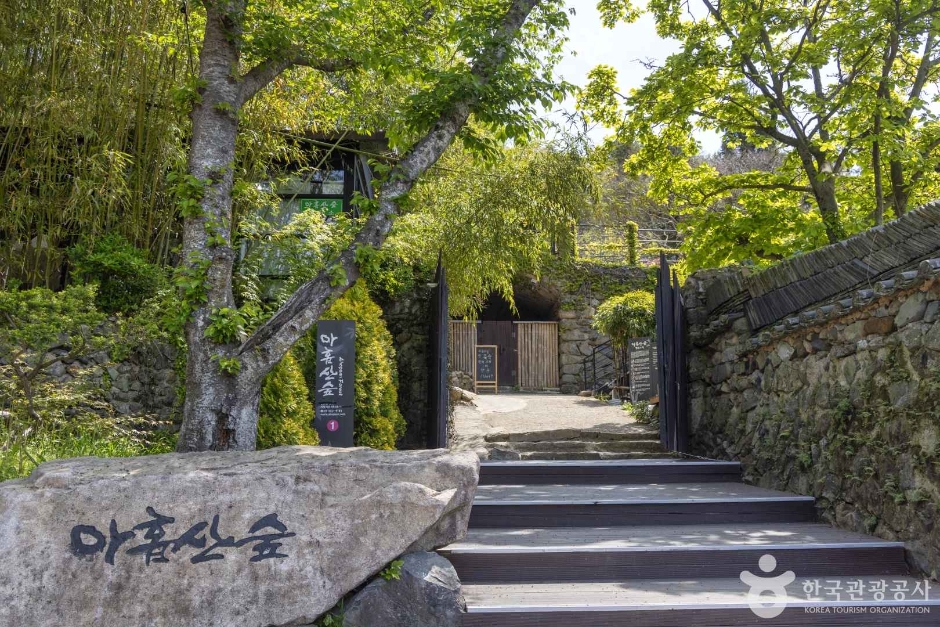
Quick public-transport route
- Take Busan Metro Line 1 from Busan Station toward Nopo.
- Ride to Nopo Station, the northern terminal.
- Use live Korean map navigation to find Gijang-gun village bus 2-3.
- Get off at Midong Village.
- Walk to Ahopsan Forest with 아홉산숲 pinned.
This is not a frequent downtown route. Check the village bus departure before leaving Busan Station and again at Nopo. If the wait is long or the final return does not suit your schedule, take a taxi rather than improvising on rural roads.
Why Nopo is the useful transfer point
Line 1 runs directly from Busan Station to Nopo without a subway transfer. Nopo places you much closer to Cheolma-myeon, where Ahopsan Forest is located. The difficult part is not the metro; it is the limited village-bus connection and the final approach.
A T-money card works for normal metro and local-bus travel. See the T-money guide before relying on a small village bus. Keep your destination displayed in Korean and press the stop button before Midong Village.
Taxi from Nopo: often the sensible compromise
A taxi from Busan Station is expensive because Ahopsan Forest is far outside the center. Taking Line 1 to Nopo and then a taxi cuts the road distance while avoiding the village-bus wait. This is especially useful for a family, a group sharing the fare, or a traveler with a fixed entry window.
The return needs equal attention. Rural taxi availability can be less predictable than in central Busan. Before entering the forest, check whether your taxi app shows nearby vehicles, save the Korean address, and keep the village bus as a backup. Do not wait until closing time with a nearly empty phone battery.
Check admission before traveling
Ahopsan Forest is privately managed, not an always-open municipal park. Current visitor information notes that group tourist buses require reservations, while individual entry policies, admission fees, hours, closure days, and weather restrictions can change. Check the official Ahopsan Forest website or contact the site on the morning of your trip.
Do not assume that an old blog’s price or summer hours apply to your date. A private forest may close for maintenance, fire risk, severe weather, filming, or management reasons. If you cannot confirm that individual visitors can enter, postpone the trip rather than spending two hours reaching a locked gate.
How much time should you allow?
Public transport can take 90–120 minutes each way. The forest trails themselves generally need about one to two hours for a relaxed visit, depending on the open route and your pace. With waiting and a meal, this becomes a full half-day and can easily occupy most of a day.
Ahopsan Forest is not suitable for a KTX layover. Store large luggage at Busan Station, leave early, and avoid a fixed evening train unless you have a very large return buffer. One missed village bus can change the schedule significantly.
What makes Ahopsan Forest different?
The forest is known for old bamboo groves, Geumgang pine, and woodland protected by the same family for generations. It has also appeared as a filming location. The attraction is the atmosphere of mature trees and carefully preserved paths, not rides or a large visitor complex.
Expect a nature walk with uneven ground, shade, insects, and seasonal conditions. Bamboo photos are popular, but the forest is more than one photo spot. Move quietly, stay on permitted paths, and do not damage plants or enter restricted areas for a better angle.
What to wear and bring
- Closed walking shoes with grip.
- Water and a small snack for before or after the visit.
- Insect repellent in warm months.
- A charged phone and portable battery.
- Rain protection and a light layer according to the forecast.
The bamboo canopy can feel cool and damp even when central Busan is sunny. After rain, soil and roots become slippery. Avoid sandals, wheeled luggage, and clothing that restricts walking.
Best time of day
Morning is the safest choice. It gives you more village-bus options, softer light, lower summer heat, and time to recover if transport takes longer than expected. Arriving late in the afternoon creates unnecessary pressure around admission and return transport.
Weekends can be busier, while weekday closure patterns must be checked directly. During hot or stormy weather, follow official notices rather than assuming dense shade makes the forest safe.
A realistic no-car itinerary
- Confirm admission and weather before breakfast.
- Check the Nopo-to-Midong village bus timing.
- Take Line 1 from Busan Station to Nopo.
- Use village bus 2-3 or a taxi to the forest.
- Spend one to two hours on the permitted trail.
- Leave while multiple return options remain.
If you want another northern Busan outdoor trip with clearer bus access, compare the Geumjeongsanseong Fortress route. If the forest is closed, a market-based east-Busan alternative is the Gijang Market guide.
Ahopsan Forest vs a city park
Choose Ahopsan for bamboo, mature private woodland, and a slow nature-focused outing. Choose a central park when you need flexible hours, easy transit, no entry uncertainty, or a short visit. The long journey is worthwhile only if the forest itself is a priority.
Use the navigation tools listed in the Korea travel apps guide, but verify the entrance policy separately; map routing cannot tell you whether a private site is open.
Common mistakes to avoid
- Traveling without confirming individual admission and closure information.
- Assuming village bus 2-3 runs as frequently as the subway.
- Checking only the outbound route and not the return bus.
- Taking a taxi in without planning how to get one back.
- Bringing luggage or wearing slippery shoes.
- Starting late with a fixed KTX departure that evening.
FAQ
How do I get from Busan Station to Ahopsan Forest?
Take Line 1 to Nopo Station, then use Gijang village bus 2-3 to Midong Village and walk to the forest entrance.
How long does the trip take?
Allow about 90–120 minutes each way by public transport. Village-bus waiting time is the biggest variable.
Do I need a reservation for Ahopsan Forest?
Current visitor information specifically notes reservations for group tourist buses. Individual rules can change, so confirm admission, hours, and closures directly before traveling.
Is a taxi worth it?
A taxi from Nopo Station is often worthwhile for a group or when the village-bus interval is inconvenient. Plan the return taxi before entering.
How long do you need inside Ahopsan Forest?
Plan roughly one to two hours for the open trails, plus significant travel time from central Busan.
Can I visit with a suitcase?
No. Uneven forest paths and limited rural transport make luggage impractical. Store it at Busan Station and carry only a day bag.


댓글
댓글 쓰기