Busan Station to Geumjeongsanseong Fortress: Subway and Bus Guide
The easiest public-transport route from Busan Station to the Geumjeongsanseong Fortress village area is Metro Line 1 to Oncheonjang Station, Exit 5, then bus 203 to Geumseong-dong Community Service Center. Allow about 70–90 minutes from the KTX concourse. This route reaches the mountain village inside the fortress area; it does not deliver you to every gate or complete the long fortress trail. Choose your exact gate, village, or hike before leaving.
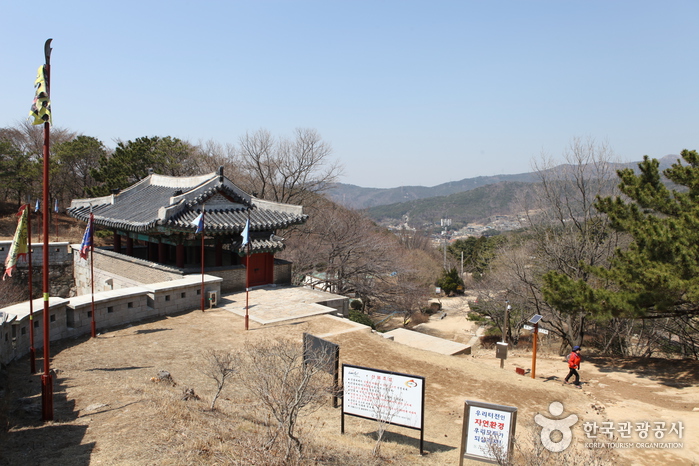
Quick route from Busan Station
- Follow signs from the KTX/Korail station to Busan Metro Station.
- Take Line 1 toward Nopo.
- Get off at Oncheonjang Station and use Exit 5.
- Find bus 203 at the Oncheonjang Station entrance area.
- Get off at Geumseong-dong Community Service Center for the fortress village area.
Official Busan visitor information recommends this route for Geumjeongsanseong Village. Pin 금성동 행정복지센터 as the bus destination and separately pin the gate or wall section you intend to visit. “Geumjeongsanseong Fortress” covers a huge mountain area, so one general map pin is not enough.
Why there is no single fortress entrance
Geumjeongsanseong is a large mountain fortress with multiple gates, long wall sections, hiking paths, village roads, and links toward other Geumjeongsan attractions. The address attached to a tourism listing does not represent a ticket gate where every traveler begins.
For a first visit, choose one of these goals before traveling:
- A relaxed visit to Geumseong-dong village plus a nearby wall section.
- A point-to-point hike between a gate and the village.
- A longer mountain route involving a summit or Beomeosa direction.
The first option is safest for travelers without hiking experience. The third requires proper route research, daylight, weather awareness, and enough fitness for steep terrain.
Bus 203: what travelers should know
Bus 203 climbs from the Oncheonjang area into the mountain community. Check its live arrival and direction rather than relying on a timetable screenshot. Mountain roads can make the ride feel slower and more winding than an ordinary city bus route.
Use a T-money card, tap according to the current bus procedure, and press the stop button before your destination. If you are new to local transit, read the T-money guide. Sit if possible and secure loose bags on curved roads.
Before starting a walk, check the next return buses in your map app. Service intervals can be less forgiving than central subway routes. Do not wait until sunset to discover that the next practical connection is far away.
How long should you allow?
Transport takes roughly 70–90 minutes each way. A village-and-wall visit needs at least two hours on site, making this a half-day minimum. A genuine hike can turn it into a full-day trip.
Do not combine the fortress with a fixed KTX departure unless you create a large buffer. Mountain walking time is difficult to predict, and missing a bus adds delay. Store large luggage at Busan Station; wheeled cases are unsuitable for trails and village slopes.
A beginner-friendly half-day plan
- Leave Busan Station in the morning.
- Take Line 1 to Oncheonjang and bus 203 to the community center.
- Walk through the village and visit one nearby fortress section shown in live navigation.
- Eat locally only after confirming restaurant opening and your return bus time.
- Return to Oncheonjang before late afternoon.
This plan provides mountain scenery and historical context without pretending the entire fortress can be covered casually. If the trail is muddy, icy, or poorly visible, keep to the village and accessible paved areas.
Can you hike the whole fortress?
Not as an ordinary sightseeing walk. The fortress system is extensive, and a complete route demands substantial time, navigation, food, water, and appropriate footwear. Online trail lengths often describe different sections, so do not compare numbers without checking the exact start and finish.
Use a current Korean hiking map, download the route, and tell someone your plan. Start early. Turn back if weather worsens, daylight is running out, or signs no longer match the planned route. Mountain rescue is not a substitute for preparation.
Weather and seasonal safety
Spring and autumn are generally the most comfortable, but popular weekends can be busy. Summer brings heat, humidity, insects, and thunderstorms. Winter can bring ice and strong wind even when downtown Busan feels manageable.
Wear hiking shoes with grip, carry water, sun protection, a charged phone, and a light layer. After heavy rain, avoid steep or eroded paths. In winter, do not assume ordinary sneakers are sufficient merely because snow is not visible at the subway station.
Food and makgeolli in the fortress village
Geumjeongsanseong Village is associated with local food and fortress-style makgeolli. Treat it as an optional meal, not a guaranteed attraction: restaurant closing days and operating hours vary. Check a specific restaurant on the day and confirm prices before ordering.
If you drink alcohol, do it after hiking, not before. Mountain paths, stone steps, and bus boarding require balance. Never drive after drinking, and remember that a heavy meal plus alcohol can make the long return journey uncomfortable.
Geumjeongsanseong vs Dongnaeeupseong
Geumjeongsanseong is a large mountain fortress suited to nature, village scenery, and hiking. Dongnaeeupseong is an urban historic walled-town area with restored sections spread through modern neighborhoods. They have different logistics and should not be treated as interchangeable “castle” visits.
Choose the mountain fortress for a half-day or full-day outdoor trip. Choose the Dongnaeeupseong route for easier Line 1 access and a shorter history walk. For a single indoor history destination, see the Busan Museum guide.
Common mistakes to avoid
- Searching for one universal “Geumjeongsanseong entrance.”
- Boarding bus 203 without checking its direction and live stop.
- Starting a long hike after lunch with no daylight calculation.
- Depending on cafés or restaurants for all water and food.
- Drinking makgeolli before walking steep trails.
- Leaving no backup time before a reserved train.
FAQ
How do I get from Busan Station to Geumjeongsanseong Fortress?
Take Line 1 to Oncheonjang Station, use Exit 5, then take bus 203 to Geumseong-dong Community Service Center for the fortress village area.
How long does the journey take?
Allow about 70–90 minutes each way, including the subway, bus wait, and mountain-road ride.
Is Geumjeongsanseong free to visit?
The outdoor fortress and mountain routes are not organized around one general admission gate. Individual facilities, programs, parking, or transport can have separate charges.
Can beginners visit without doing a long hike?
Yes. Use bus 203 to the village area, explore a nearby accessible wall section, eat locally if desired, and return by the same bus.
Can I visit Beomeosa and the fortress in one day?
Experienced hikers may connect mountain routes, but it is not a casual first-timer itinerary. Research the exact trail, elevation, daylight, and return transport before attempting it.
What should I wear?
Wear shoes with strong grip and layered outdoor clothing appropriate to the mountain forecast. Carry water, sun protection, and rain or cold-weather gear as needed.


댓글
댓글 쓰기