Busan Station to Samgwangsa Temple: Subway and Bus Guide
The simplest way to travel from Busan Station to Samgwangsa Temple is to take Busan Metro Line 1 to Seomyeon, walk to the bus stop opposite Young Kwang Book Store near Exit 9, and ride Village Bus Busanjin-gu 15 to Samgwangsa Temple. Allow about 50–70 minutes in normal traffic, including the transfer. This route avoids an uphill walk from the nearest large-road bus stops and is the option I would use as a local.
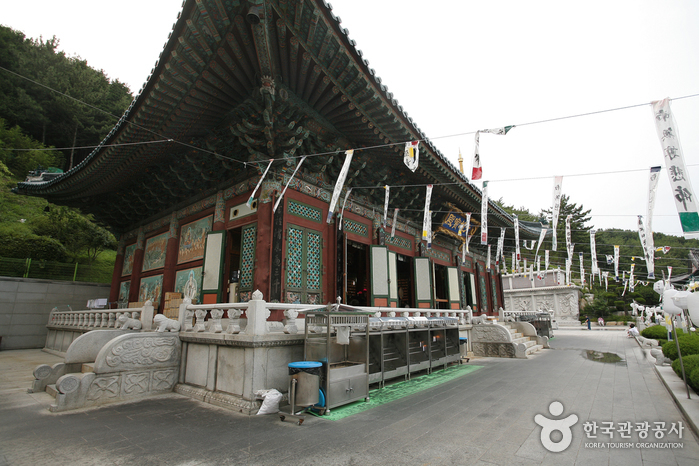
Busan Station to Samgwangsa Temple at a glance
- Best route: Metro Line 1 to Seomyeon, then Village Bus Busanjin-gu 15
- Travel time: approximately 50–70 minutes in ordinary conditions
- Transfers: one
- Payment: use a transportation card for both the subway and village bus
- Destination in Korean: 삼광사
- Address: 77 Choeupcheon-ro 43beon-gil, Busanjin-gu, Busan
The time is an estimate, not a fixed timetable. Traffic around Seomyeon and Choeup can slow the bus, and the Lotus Lantern period near Buddha’s Birthday is a special case with much heavier crowds.
Step-by-step route from Busan Station
1. Take Line 1 from Busan Station to Seomyeon
Enter Busan Station subway station, which is separate from but directly beside the KTX railway station. Take orange Line 1 in the direction of Nopo. Seomyeon is six stops away. Do not take a train toward Dadaepo Beach.
If you arrived by KTX with a suitcase, consider leaving it at the station rather than carrying it to the temple. The village bus is compact and can become crowded. This guide to Busan Station luggage storage and lockers explains the practical options.
2. Leave Seomyeon Station through Exit 9
Follow signs for Exit 9. Seomyeon is a large interchange, so the walk from the platform to street level can take longer than expected. Once outside, locate the bus stop opposite Young Kwang Book Store. The official Visit Busan directions use this landmark because it is more reliable than choosing a random stop on the same road.
Search for “영광도서” or “삼광사” in a Korean navigation app if you need a visual check. Bus stops around Seomyeon serve many routes, so confirm that the display or stop information includes 부산진구15.
3. Ride Village Bus Busanjin-gu 15
Board village bus Busanjin-gu 15 and tap your transportation card. Stay on until the Samgwangsa Temple stop, shown in Korean as 삼광사. The official tourism directions describe the stop as Samgwangsa Temple or Samgwangsa Temple Precincts. The final part climbs into the residential hills, which is why this bus is more convenient than trying to walk the entire way.
Tap your card again when getting off. Korea’s transfer discounts depend on the proper tap-off procedure. If this is your first trip, read the Korea T-money card guide for tourists before you travel.
How to return to Busan Station
Take Busanjin-gu 15 back toward Seomyeon, then enter Seomyeon Station and use Line 1 toward Dadaepo Beach. Get off at Busan Station. Save the Korean name 부산역 in case you need to show your destination to a driver or ask for help.
Do not plan a tight KTX connection after the temple. Village buses can be delayed by traffic and may operate less frequently than the subway. I would leave a buffer of at least 30–45 minutes beyond the app’s predicted arrival time, then add the time needed to retrieve luggage and find the correct railway platform.
When a taxi makes more sense
A taxi can be worthwhile for three or four people, travelers with limited mobility, or anyone visiting early in the morning or after dark. Enter the full temple name and address rather than saying only “Samgwangsa,” and keep the Korean spelling 삼광사 ready.
From Busan Station, road travel varies greatly with traffic. Seomyeon is one of Busan’s busiest areas, so a taxi is not always dramatically faster at rush hour. A useful compromise is to take Line 1 to Seomyeon and then use a taxi for the uphill final section.
Regular days versus the Lotus Lantern Festival
Samgwangsa is best known internationally for its enormous lantern display around Buddha’s Birthday, but a festival visit is very different from an ordinary temple visit. On regular days, the grounds are calmer and the subway-plus-village-bus route is straightforward. During the lantern period, expect queues, crowded buses, temporary traffic controls, and slower walking inside the complex.
Festival dates and access arrangements change each year. Check the temple or Visit Busan announcement shortly before going rather than relying on an old blog timetable. If your main goal is photography, arrive before sunset to understand the layout, then stay until the lanterns are illuminated. Keep your return plan flexible because the last part of the evening can be especially congested.
What to expect at Samgwangsa Temple
Samgwangsa is a large urban Buddhist temple built into the hills of Busanjin-gu. It is not a tiny historic hermitage: the complex has substantial halls, courtyards, stairways, and sloping roads. Give yourself about 60–90 minutes for an unhurried visit on a regular day. Lantern-season visitors may need considerably longer.
Wear shoes with grip and clothing suitable for a place of worship. Speak quietly near prayer halls, keep doorways clear, and never photograph worshippers closely without permission. Photography of the exterior is generally the least intrusive choice. If a service is underway, observe from the back or wait outside rather than walking through the congregation.
Accessibility and practical cautions
The bus reduces the steep approach, but the temple itself still includes slopes and stairs. Travelers who cannot manage uneven or inclined surfaces should contact the temple in advance about current vehicle access and accessible routes. A taxi may reach farther into the approach, but it does not guarantee step-free access to every hall.
Carry water in hot weather, yet avoid eating inside worship spaces. In rain, stone and painted surfaces can be slippery. During summer, shade is limited in open courtyards; during winter, the hillside can feel colder than central Busan. For navigation, download your preferred Korean map app before leaving the station. Our overview of the best Korea travel apps can help with setup.
A sensible half-day plan
Start from Busan Station after breakfast, reach Samgwangsa before midday, and return to Seomyeon for lunch. This keeps the temple visit relaxed and avoids depending on a village bus immediately before a train departure. If you are continuing around Busan, Seomyeon is a useful interchange for Line 1 and Line 2.
For another local-style destination on a different day, the Busan Station to Dongnaeeupseong route guide covers a historic neighborhood north of the center. Do not combine both unless you are comfortable with multiple transfers and a full day of walking.
FAQ
What is the easiest way from Busan Station to Samgwangsa Temple?
Take Busan Metro Line 1 from Busan Station to Seomyeon. Leave through Exit 9, find the stop opposite Young Kwang Book Store, and take Village Bus Busanjin-gu 15 to Samgwangsa Temple.
How long does the trip take?
Allow roughly 50–70 minutes under normal conditions, including the Seomyeon transfer. Add extra time during rush hour, weekends, rain, and the Lotus Lantern period.
Can I use a T-money card on the village bus?
Yes. Tap when boarding and again when exiting. The same transportation card works on the Busan subway and local bus network.
Is Samgwangsa Temple free to visit?
General access to Korean Buddhist temple grounds is typically free, but special programs or events may have separate arrangements. Check current official notices before a festival visit.
Is Samgwangsa worth visiting outside lantern season?
Yes, especially if you want a quieter urban temple experience. The famous lantern spectacle is seasonal, while the halls, hillside setting, and active religious atmosphere can be experienced on regular days.
Can I bring a large suitcase?
It is physically possible, but not practical. The village bus can be crowded and the temple has slopes and stairs. Store large luggage at Busan Station and travel with a small day bag.


댓글
댓글 쓰기