Busan Station to Samnak Eco Park: Subway and Walking Guide
The easiest rail route from Busan Station to Samnak Eco Park is to take Metro Line 1 to Seomyeon, transfer to Line 2 toward Yangsan, get off at Sasang, change to the Busan–Gimhae Light Rail Transit, and ride one stop to Gwaebeop Renecite Station. From Exit 1, walk about 16 minutes to the park. Allow roughly 55–75 minutes in total, plus more time if you are heading to a specific flower field or wetland inside the huge riverside park.
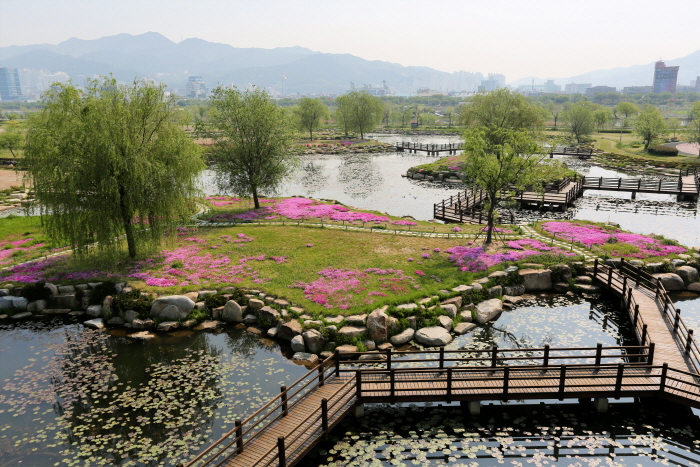
Samnak Eco Park is not a compact garden with one main gate. It stretches along the Nakdonggang River and contains walking paths, cycling routes, wetlands, seasonal flowers, sports areas, and separate facilities. Choosing an exact destination pin is more important than simply searching “Samnak Eco Park.”
Busan Station to Samnak Eco Park at a glance
- Rail route: Line 1 → Line 2 → Busan–Gimhae Light Rail Transit
- Transfers: Seomyeon and Sasang
- Nearest useful station: Gwaebeop Renecite
- Exit: Exit 1
- Walk: about 16 minutes
- Admission: free for the general park; individual facilities may differ
- Korean name: 삼락생태공원
- Address: 1231 Nakdong-daero, Sasang-gu, Busan
Use a transportation card for the connected rail journey. If this is your first trip, our Korea T-money card guide explains where the card works and why you should tap correctly.
Step-by-step route from Busan Station
1. Take Line 1 to Seomyeon
Board Busan Metro Line 1 toward Nopo and get off at Seomyeon. Follow signs for Line 2. This is a large interchange, so allow several minutes to walk between platforms.
2. Take Line 2 to Sasang
Board Line 2 toward Yangsan and get off at Sasang. Do not exit the station complex too early; follow signs for the Busan–Gimhae Light Rail Transit. Sasang also has bus and railway facilities, which can make the area confusing for first-time visitors.
3. Ride the light rail to Gwaebeop Renecite
Take the light rail one stop from Sasang to Gwaebeop Renecite. Use Exit 1. Current Visit Busan directions estimate a 16-minute walk from this station to Samnak Eco Park.
4. Navigate to a specific zone
Before leaving the station, search the Korean name of the feature you want: 삼락생태공원 for the general park, 삼락벚꽃길 for the cherry-blossom road, or the exact facility shown in your event notice. The park is approximately 4.7 million square meters, so reaching its edge does not mean you have reached your intended photo spot.
Would Sasang Station be easier?
Sasang is the major interchange and may look close on a map, but Gwaebeop Renecite is the official rail stop used in current visitor directions for the park. Walking from Sasang can work for a different section, yet it may add distance and involve less intuitive roads.
Use the station that is closest to your exact destination pin. For a spring event, temporary entrances, stages, or traffic controls may change the best approach. Check the organizer’s current map rather than relying on an old festival blog post.
When is Samnak Eco Park worth visiting?
Spring: cherry blossoms and canola flowers
Spring is the park’s best-known season. Cherry-blossom routes and yellow canola fields attract large crowds, especially in early April. Blooming dates vary with winter temperatures and spring weather; do not book a trip around a date from a previous year.
Arrive on a weekday morning for easier photos and a calmer walk. During peak bloom, expect crowded paths, temporary event zones, and heavier traffic near parking areas.
Summer: lotus, wetlands, heat, and insects
Wetland vegetation and lotus areas are attractive in summer, but the riverside is exposed and humid. Bring water, sun protection, and insect repellent. Begin early and avoid the hottest afternoon hours.
Autumn: reeds, wildflowers, and cycling weather
Autumn is comfortable for long walks and cycling. Reeds and seasonal grasses give the park a quieter landscape than spring. Check sunset time because paths away from the main facilities can become dark quickly.
Winter: birdwatching and open views
Winter can offer migratory-bird watching and clear riverside views, but wind along the Nakdonggang can feel severe. Observe wildlife from a distance and never enter protected habitat or feeding areas.
How much time should you allow?
Allow two to three hours for one chosen zone and a relaxed walk. A longer cycling route, flower photography session, or wetland visit can fill half a day. The full park is too large to “see everything” on foot in one short visit.
From Busan Station, the complete outing usually needs at least four to five hours including round-trip transport. Do not schedule it immediately before a KTX departure. If you arrive with bags, leave them using our Busan Station luggage storage guide.
Cycling versus walking
The flat riverside setting suits cycling, but rental availability, operating periods, and rules can change. Confirm the current rental point and return deadline before starting. Inspect brakes and tire pressure, and use designated paths.
Walking is better for photography and wetland observation. Choose a short loop around one landscape rather than following the river without tracking distance. Save your station and turnaround point in a map app; our Korea travel apps guide helps with offline setup and Korean place names.
Facilities and food
Do not assume a café or convenience store is beside every path. Buy water and a simple snack around Sasang or the station area. Take all trash back to a collection point and avoid eating beside wildlife habitats.
Restrooms and sports facilities exist, but the distance to them depends on your zone. Use posted park maps when you arrive. Some recreation facilities, campgrounds, or seasonal programs have their own hours, reservations, and fees even though general park entry is free.
Rain, flooding, and air quality
Samnak is a riverside ecological park. Heavy rain, typhoons, high river levels, maintenance, or habitat protection can close paths. Never cross a barrier because a route looks dry. Check Busan weather and local notices before a visit after prolonged rain.
Fine-dust days reduce long views and make outdoor exercise less pleasant. In summer, heat warnings matter more than a cloudy forecast. Bring layers in spring and autumn because open-river wind can change the apparent temperature.
Accessibility and traveler safety
Many riverside paths are broad and relatively flat, but the 16-minute approach from the station and long distances inside the park can be tiring. Travelers using a wheelchair or stroller should confirm the closest accessible entrance and consider a taxi to the exact zone.
- Wear comfortable shoes and carry water.
- Keep off restoration areas and flower beds.
- Do not approach or feed birds.
- Use lights and reflective gear if cycling near dusk.
- Save the return station before entering a long trail.
- Leave before severe weather reaches the river.
Common mistakes to avoid
- Searching only the park name instead of a specific zone
- Expecting flowers to bloom on last year’s dates
- Underestimating the walk from the station
- Trying to cover the entire park in one hour
- Depending on a café inside the park
- Entering a closed path after heavy rain
FAQ: Busan Station to Samnak Eco Park
Which station is closest to Samnak Eco Park?
Current official tourism directions use Gwaebeop Renecite Station on the Busan–Gimhae Light Rail Transit, Exit 1, followed by about a 16-minute walk.
How long does it take from Busan Station?
Allow roughly 55–75 minutes to reach the park edge, including two transfers and the final walk.
Is Samnak Eco Park free?
General park entry is free. Separate facilities, camping, rentals, or programs may have their own charges.
When are the cherry blossoms?
They are usually a spring attraction, often around late March or early April, but exact peak bloom changes every year. Check current local bloom reports.
Can I visit after rain?
Light rain may be manageable, but river levels and path closures can persist after heavy rain. Obey all barriers and local notices.
Is the park good for a short layover?
Not usually. The transfers, final walk, and park size make it better for a half-day than a tight stop between trains.
Local takeaway: Use Gwaebeop Renecite Exit 1, choose one exact park zone before leaving the station, and plan Samnak as a spacious riverside half-day rather than a quick city garden.


댓글
댓글 쓰기