Busan to Jinhae Cherry Blossom Festival: Bus Guide and Walking Route
The easiest way to visit the Jinhae Cherry Blossom Festival from Busan without a car is an early intercity bus from Busan West Bus Terminal at Sasang. Get off in central Jinhae, walk first to Yeojwacheon Stream, continue to Jehwangsan Park and Jungwon Rotary, and treat Gyeonghwa Station as an optional bus or taxi side trip.
The bus ride is not the hard part. Festival traffic, ticket queues, and trying to cross Jinhae repeatedly are what waste the day. This guide gives you a compact route, realistic buffers, Korean place names, and a return strategy that works even when the streets are crowded.
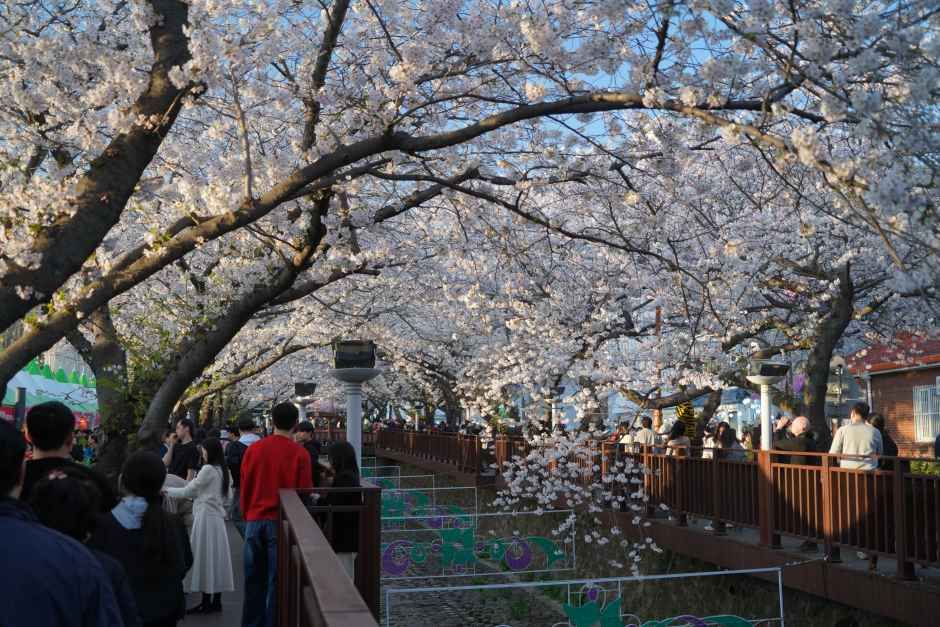
Photo source: Korea Tourism Organization
Quick route from Busan to Jinhae
- Take Busan Metro Line 2 to Sasang Station (사상역).
- Walk to Busan West Bus Terminal (부산서부버스터미널).
- Buy an intercity ticket to Jinhae (진해).
- From the Jinhae terminal area, walk or take a short local bus/taxi to Yeojwacheon Stream (여좌천).
- Finish your central walking loop before deciding whether there is time for Gyeonghwa Station.
Schedules and festival traffic change each season, so check the current departure board rather than relying on an old blog timetable. My Korea intercity bus guide explains ticket machines, terminals, and baggage.
When should you leave Busan?
On a festival weekend, aim to reach Sasang before 7:00 a.m. if possible. An early bus gives you three advantages: a shorter ticket line, a less crowded first walk at Yeojwacheon, and a backup plan if traffic delays the journey.
Weekdays are noticeably easier, but the most famous places still become busy by late morning. Cherry blossoms do not follow a fixed calendar. Festival dates are announced in advance, while peak bloom depends on weather. Check both the official festival notice and a current bloom report before traveling.
Best walking route for a first visit
Stop 1: Yeojwacheon Stream
Go here first. Yeojwacheon—often called the Romance Bridge area—is the narrow stream lined with cherry trees and small bridges. It becomes difficult to move and photograph once tour groups arrive.
Save the Korean name 여좌천 로망스다리 in your map app. Walk one direction along the stream rather than repeatedly crossing the same bridges. On wet days, watch for slippery temporary decking and crowded stair edges.
Stop 2: Jehwangsan Park
Walk toward Jehwangsan Park (제황산공원) for an elevated view over central Jinhae. The stairway is steep; there may be a monorail, but queues during the festival can cancel the time-saving benefit. If mobility or time is limited, enjoy the lower park and continue.
Stop 3: Jungwon Rotary and festival streets
Use the central festival area for lunch and official events. Eat before noon or after the main rush. Street-food lines look fast but can move slowly when one stall becomes popular. Carry a small trash bag because bins may fill quickly.
Optional stop: Gyeonghwa Station
Gyeonghwa Station (경화역) is a famous former railway cherry-blossom site, but it is not part of the compact central walking loop. Add it only after checking the route and your return-bus buffer. A taxi is often the most efficient option for two or more people; local buses can become packed and delayed.
The railway is not a normal passenger route from Busan. Do not plan to arrive at Gyeonghwa by train just because photographs show tracks.
Bus terminal choices: Sasang, Hadan, or another route?
| Starting area | Practical choice | Why |
|---|---|---|
| Seomyeon, Sasang, western Busan | Busan West Terminal | Simple Line 2 access and a clear intercity route |
| Hadan or southwestern Busan | Check current Hadan departures | May avoid backtracking to Sasang, depending on the seasonal schedule |
| Haeundae, Gwangalli, eastern Busan | Compare terminal travel times carefully | Crossing Busan can take as long as the intercity ride |
Do not select a route solely because its bus ride looks five minutes faster. Compare the full trip from your hotel to the terminal and from the Jinhae stop to Yeojwacheon. Use the Korean mapping tools in my Korea travel apps guide.
A realistic festival-day schedule
- 6:30–7:30 a.m.: arrive at Sasang, buy the next practical Jinhae ticket, and board.
- 8:00–9:30 a.m.: reach Jinhae and go directly to Yeojwacheon.
- 9:30–11:00 a.m.: walk the stream and continue toward Jehwangsan Park.
- 11:00 a.m.–1:00 p.m.: park viewpoint, Jungwon Rotary, and an early lunch.
- 1:00–3:00 p.m.: Gyeonghwa Station only if traffic and your energy allow; otherwise enjoy central streets slowly.
- 3:00–5:00 p.m.: return toward the bus terminal before the largest evening departure wave.
This is intentionally conservative. A festival day moves slower than an ordinary day, and phone navigation times may not reflect pedestrian controls or temporary road closures.
How to return to Busan without stress
Check return arrangements soon after arriving in Jinhae. If advance purchase is available, choose a departure with daylight buffer. If tickets are sold only close to departure, note the terminal location and return early.
Never build your plan around the last possible bus. Festival traffic may make a taxi to a different terminal expensive or slow. Keep your accommodation name and address saved in Korean for the final Busan subway ride.
What to bring
- A charged phone and power bank for maps and updated notices.
- A transit card with balance for Busan and local Jinhae buses; buy intercity tickets separately.
- Comfortable walking shoes with grip.
- A light layer: coastal wind can feel colder than the forecast.
- Water and a compact snack for queues.
- Minimal luggage. Large suitcases are impractical in festival crowds.
Common mistakes
- Arriving after lunch and expecting uncrowded photographs.
- Assuming festival dates guarantee peak blossom.
- Trying to walk from central Jinhae to every famous location.
- Planning to take a passenger train to Gyeonghwa Station.
- Trusting an old timetable without checking seasonal operations.
- Waiting until evening to think about the return ticket.
If blossom crowds are not your priority, consider a coast-focused Busan to Geoje day trip by bus. For an easier walkable heritage route, compare the Busan to Gyeongju day trip.
FAQ
Can I visit Jinhae from Busan in one day?
Yes. The cities are close enough for a comfortable day trip if you start early and focus on the central festival area. Add Gyeonghwa Station only when transport conditions are favorable.
Where do buses from Busan to Jinhae leave?
Busan West Bus Terminal at Sasang is the most straightforward choice for many visitors. Other departures may operate from Hadan or elsewhere, so compare current routes from your accommodation.
Do I need to reserve the bus?
Rules and availability vary by route and season. During the festival, arrive early even if advance booking is unavailable. Check the terminal's current sales method before your trip.
When is the Jinhae Cherry Blossom Festival?
It is normally held around late March and early April, but exact dates are announced each year. Peak bloom can fall before or after the busiest festival weekend.
Is Yeojwacheon close to Gyeonghwa Station?
They are separate attractions. Yeojwacheon belongs in the central walking route, while Gyeonghwa Station normally requires a local bus or taxi and extra time.
Is Jinhae worth visiting outside blossom season?
Jinhae has naval history, parks, and coastal scenery, but the famous stream and railway experience is most compelling during blossom season. Outside spring, other Busan day trips may offer more value for a first-time visitor.


댓글
댓글 쓰기