Busan to Damyang Day Trip: Bus Route to Juknokwon and Metasequoia Road
A Busan to Damyang day trip without a car is possible, but it normally requires a transfer at Gwangju U-Square Bus Terminal. There is no passenger train station serving central Damyang and you should not assume a nonstop Busan–Damyang bus. Leave before sunrise, keep the itinerary to Juknokwon, Gwanbangjerim, and Metasequoia Road, and reserve enough time for the return connection in Gwangju.
This is a long transport day. If you cannot reach Damyang by late morning, stay overnight in Gwangju or choose a closer Busan day trip. The route below is designed for travelers who still want to make the independent day trip work.
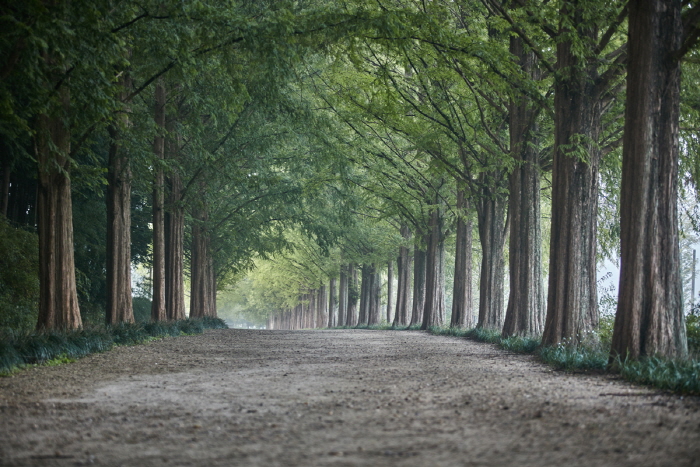
Photo source: Korea Tourism Organization
Quick route from Busan to Damyang
- Take Busan Metro Line 1 to Nopo Station (노포역).
- Enter the connected Busan Central Bus Terminal (부산종합버스터미널).
- Ride an express bus to Gwangju U-Square (광주 유스퀘어).
- At U-Square, transfer to a bus for Damyang Bus Terminal (담양공용버스터미널).
- Walk or take a short local bus/taxi to Juknokwon and the central forest area.
Some search results may show another departure point or a date-specific through route. Use it only if the official terminal timetable confirms it for your exact day. My Korea intercity bus guide explains separate tickets and terminal transfers.
Why Gwangju is the practical transfer
Damyang sits just north of Gwangju, and frequent regional transport links the two. Busan is much farther east. Routing through Gwangju U-Square gives you more fallback departures than attempting an obscure multi-stop regional connection.
U-Square is a large terminal. Your Busan bus and Damyang bus may use different ticket counters or platforms, so allow at least 30 minutes between separately booked segments. Do not treat the published arrival minute as a guaranteed connection during weekend or holiday traffic.
Step 1: Busan to Gwangju U-Square
Reach Nopo early. From Seomyeon, Metro Line 1 goes directly to Nopo; from Haeundae or Gwangalli, add cross-city subway time. Buy the earliest practical Gwangju ticket and confirm that the destination is Gwangju U-Square, not a different Gwangju-area stop.
The express ride is roughly three hours depending on service and traffic. Carry breakfast and water. A stop at a highway rest area may occur, but do not depend on it for a full meal or a long break.
Step 2: Gwangju to Damyang
At U-Square, buy a ticket to Damyang (담양). The regional ride is much shorter than the Busan segment, but waiting time determines whether your day trip remains worthwhile. If the next departure is late, compare a taxi only after understanding the distance and fare.
Photograph the Damyang-to-Gwangju return schedule when you arrive in Damyang. Your final Busan bus leaves from Gwangju, so a missed Damyang connection can break two later legs.
A compact walking itinerary in Damyang
Stop 1: Juknokwon Bamboo Garden
Start at Juknokwon (죽녹원), the main bamboo garden. From the terminal area, use Naver Map or KakaoMap to decide whether walking, a local bus, or a short taxi is fastest. Save the Korean name because English searches may show other bamboo parks.
Allow 60–90 minutes for a focused loop. The paths include slopes and steps, and the dense bamboo does not make summer humidity disappear. Choose a shorter signed route rather than trying to cover every trail.
Stop 2: Gwanbangjerim Forest
Walk toward Gwanbangjerim (관방제림), the riverside tree embankment beside Juknokwon. This is the best connector in the itinerary because it provides scenery without another bus transfer. It also gives you a place to slow down after the bamboo paths.
Lunch: central Damyang
Damyang is known for bamboo-shoot dishes and tteokgalbi, but famous restaurants can create a long queue. On a tight day trip, choose a restaurant that can seat you quickly and confirm the price before ordering a set menu.
Stop 3: Metasequoia-lined Road
Continue to Damyang Metasequoia-lined Road (담양 메타세쿼이아길). It is not directly beside every Juknokwon entrance, so use a taxi or confirm the appropriate local transport if walking would consume too much time.
The classic attraction is a long, straight corridor of mature trees. Allow 45–75 minutes rather than planning an all-afternoon hike. Check current admission and access rules; the photogenic pedestrian section is different from simply following a nearby road on a map.
Realistic day-trip timing
- Before 6:30 a.m.: travel from your Busan accommodation to Nopo.
- Early morning: express bus to Gwangju U-Square.
- Late morning: transfer to Damyang.
- 11:30 a.m.–1:30 p.m.: Juknokwon and Gwanbangjerim.
- 1:30–2:30 p.m.: lunch.
- 2:30–4:00 p.m.: Metasequoia Road.
- By late afternoon: return to Damyang Terminal and transfer at Gwangju.
This schedule only works when the morning and evening connections align. Check actual times before leaving Busan, and keep at least one later Gwangju-to-Busan departure as a backup.
When you should stay overnight instead
Stay in Gwangju or Damyang if your earliest route reaches Damyang after noon, you want Soswaewon Garden or rural pavilions, you travel with children or limited mobility, or you dislike making a fixed evening connection after several hours of walking.
An overnight also lets you visit Juknokwon early, before large groups, and eat without watching the clock. Damyang is easy as a Gwangju day trip; it is demanding as a Busan day trip.
What not to add
Soswaewon Garden, the Korea Bamboo Museum, and Changpyeong Slow City are worthwhile, but they point you away from the compact core or require more local transport. Pick one only if you stay overnight or hire a taxi for a planned circuit.
Do not add Boseong or Suncheon to the same independent day. Those destinations create another long transfer and turn a scenic trip into a terminal checklist.
What to bring
- Confirmed or saved schedules for all four long-distance legs.
- A charged phone and power bank.
- Naver Map or KakaoMap with Korean destination names saved.
- Comfortable shoes for slopes and long forest paths.
- Water, sun protection, and a compact rain layer.
- Funds for a short taxi if a local bus gap threatens your return.
Set up navigation with my Korea travel apps guide. For a classic plantation trip, compare the Busan to Boseong Green Tea Fields route. For a much shorter forest-and-temple day, see the Busan to Tongdosa guide.
Common mistakes
- Assuming Damyang has a passenger train station.
- Searching “bamboo forest” and navigating to the wrong park.
- Booking a tight Gwangju transfer on separate bus tickets.
- Trying to visit every pavilion and museum in one afternoon.
- Waiting until Damyang to check the final Gwangju–Busan bus.
- Underestimating the subway trip from eastern Busan to Nopo.
FAQ
Can I visit Damyang from Busan in one day?
Yes, if you leave very early and the Gwangju connections align. Limit the visit to the central bamboo area and Metasequoia Road. Otherwise, stay overnight.
Is there a direct bus from Busan to Damyang?
Do not assume one operates on your date. The dependable planning method is an express bus to Gwangju U-Square followed by a regional bus to Damyang.
Is there a train from Busan to Damyang?
No passenger railway serves Damyang town. Rail can take you to Gwangju, but you still need a bus, so the all-bus route is usually simpler.
How close is Juknokwon to Metasequoia Road?
They are in the same general tourist area but not the same entrance. Walking may be possible for strong walkers, while a short taxi saves valuable day-trip time.
Can I use T-money for the whole trip?
No. Express and intercity segments require separate tickets. A transit card may be useful on eligible local buses in Gwangju or Damyang.
Is Damyang worth the long trip from Busan?
It is worth it for travelers specifically interested in bamboo landscapes and Metasequoia Road. For a general day outside Busan, Gyeongju or Tongdosa provides a much easier journey.


댓글
댓글 쓰기