Busan Station to Gukje Market Food Street: Subway and Eating Guide
The easiest route from Busan Station to Gukje Market Food Street is Busan Metro Line 1 toward Dadaepo Beach, get off at Jagalchi Station, use Exit 7, and walk about six to seven minutes toward BIFF Square and Gukje Market. The food street has no admission fee, but vendors keep individual hours. Current official information lists the first and third Sundays as regular closing days for the food street.
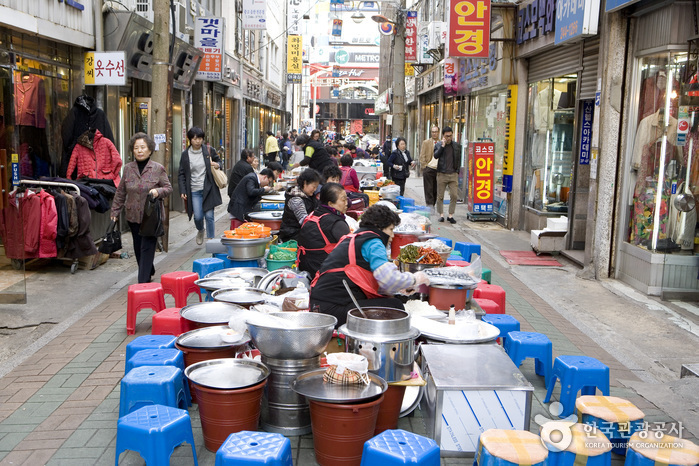
Gukje Market Food Street is a traditional market alley where diners sit on small stools beside open stalls. Popular dishes include bibim dangmyeon, Chungmu gimbap, tteokbokki, sundae, noodles, pancakes, and patbingsu. It is not the same place as Jagalchi Fish Market or Bupyeong Kkangtong Night Market. This guide explains the correct station exit, what to order, payment, hygiene, opening-day issues, and the most efficient Nampo walking route.
Busan Station to Gukje Market Food Street at a glance
- Metro: Line 1 from Busan Station to Jagalchi Station
- Best exit: Exit 7
- Final walk: about six to seven minutes
- Total travel time: roughly 20–30 minutes
- Address: 36 Junggu-ro, Jung-gu, Busan
- Hours: vary by vendor; wider market commonly operates around 09:00–20:00
- Regular food-street closure: first and third Sundays
- Korean name: 국제시장 먹자골목
Save the Korean name because English map results may point to the entire Gukje Market rather than the food alley. My Korea travel apps guide explains the best navigation tools for Busan’s market blocks.
Step-by-step subway route
1. Take Line 1 toward Dadaepo Beach
Enter the metro station below Busan Station and board the southbound Line 1 train toward Dadaepo Beach. Jagalchi is three stops away, after Jungang and Nampo. Do not take the platform toward Nopo.
2. Use Jagalchi Station Exit 7
Exit 7 is the practical side for BIFF Square and Gukje Market. Once above ground, walk toward the market district rather than the Jagalchi waterfront. Official Visit Busan information estimates about seven minutes to the main market.
3. Pass BIFF Square toward the food alley
Walk through or beside BIFF Square, then continue toward Gukje Market. Search 국제시장 먹자골목 for the final turn. The food stalls occupy a specific alley within a much larger shopping district, so “Gukje Market” alone is not precise enough.
Allow extra time during weekends because pedestrian traffic around BIFF Square can be dense. The route is short but busy.
Gukje Food Street vs Jagalchi vs Kkangtong
Gukje Market Food Street
Choose this for old-style street seating, bibim dangmyeon, Chungmu gimbap, tteokbokki, pancakes, and a daytime market atmosphere. It is embedded among clothing and general-goods shops.
Jagalchi Market
Choose Jagalchi for fresh seafood, live-fish displays, and waterfront views. It is closer to Exit 10 and has a different buying and dining system. My Busan Station to Jagalchi Market guide explains how to choose between browsing, buying seafood, and eating upstairs.
Bupyeong Kkangtong Market
Choose Kkangtong for a later market atmosphere and a broader mix of snack stalls. It sits inland beyond the Gukje blocks. Do not assume every market vendor operates on the same schedule.
Best foods to try
Bibim dangmyeon
This Busan market dish uses chewy glass noodles mixed with a spicy-sweet sauce, vegetables, and garnish. It is lighter than a full soup meal and works well when you want to sample several foods. Ask whether the sauce can be reduced if you do not tolerate spice.
Chungmu gimbap
These small plain rice rolls are served with seasoned squid or radish on the side. The flavor comes from the spicy side dishes rather than fillings inside the roll. Portions and side dishes vary by stall.
Tteokbokki, sundae, and fried snacks
These are classic market combinations. Sundae here means Korean blood sausage, not ice cream. Point to the items you want and confirm whether the quoted price is per serving or for the plate.
Milmyeon and pork soup
These are more filling Busan dishes, usually easier to eat at a small restaurant than a crowded open stall. If you plan multiple snacks, share one main dish instead of ordering a full serving for each person.
How ordering works at street stalls
Look for a menu board with prices before sitting. Pointing is acceptable, but confirm the number of servings. Say ilgeolyo only if you know the exact item; otherwise show a photo or use a translation app.
Seats belong to the stall that serves them. Do not buy food from one vendor and occupy another vendor’s stools. When crowded, finish your meal without holding the seat for an extended rest.
Some stalls accept cards, but cash is still useful in traditional markets. Carry small won notes and coins. Ask the price before ordering if it is not displayed, and pay the vendor who served you rather than leaving money on a shared counter.
Food allergies and dietary restrictions
Traditional market dishes can contain fish cake, anchovy broth, shellfish, egg, sesame, soy, wheat, pork, or seafood even when those ingredients are not obvious. Cross-contact is common because utensils, oil, pots, and preparation surfaces are shared.
Travelers with severe allergies should not rely only on a spoken English question. Carry a Korean allergy card listing the exact ingredient and the seriousness of the reaction. A controlled restaurant with a clear menu may be safer than an open stall.
Vegetarian and halal travelers should verify broth and sauces. A vegetable-looking noodle dish may contain fish-based seasoning, and tteokbokki sauce often cooks with fish cake.
When is the best time to visit?
Late morning through mid-afternoon gives you the strongest chance of finding both market shops and food vendors open. Lunch brings more atmosphere but also less seating. Visit before 17:00 if you want to combine eating with shopping inside Gukje Market.
Do not confuse this daytime food street with a guaranteed late-night market. Individual hours vary, and the wider Gukje Market commonly closes around 20:00. Official food-street information lists the first and third Sundays as holidays, so check the calendar before going.
How much time should you allow?
Allow 45–60 minutes for one or two dishes and a short walk. Book 1.5–2 hours if you want to browse the market’s clothing, household goods, vintage sections, and neighboring alleys.
The market blocks can feel maze-like. Mark your next destination before eating so you do not repeatedly cross the same crowded streets.
What to combine with Gukje Food Street
Bosu-dong Book Street
Walk inland after lunch for used books and Korean War-era market history. My Bosu-dong Book Street guide explains shop schedules and the Jagalchi walking route.
Yongdusan Park
Walk toward Gwangbok-ro and use the covered uphill escalator for the free park and optional tower. My Yongdusan Park route guide explains the easiest entrance.
BIFF Square and Jagalchi
BIFF Square is on the route from the station, while Jagalchi is a short walk toward the water. Visit Gukje first if your priority is daytime shopping, then finish near the waterfront.
A practical Nampo food half-day
- Take Line 1 from Busan Station to Jagalchi.
- Use Exit 7 and walk through BIFF Square.
- Eat one or two dishes at Gukje Market Food Street.
- Browse Gukje Market or Bosu-dong Book Street.
- Walk through Gwangbok-ro to Yongdusan Park.
- Finish at Jagalchi waterfront near sunset.
This order puts the time-sensitive shopping and food stalls earlier while leaving the outdoor park and waterfront for later.
Common mistakes to avoid
- Going to Jagalchi Fish Market and thinking it is Gukje Food Street
- Visiting on the first or third Sunday without checking closures
- Sitting at one vendor’s stools with another vendor’s food
- Ordering without confirming servings and prices
- Assuming a vegetable dish contains no seafood broth
- Expecting all stalls to remain open late at night
FAQ: Busan Station to Gukje Market Food Street
Which subway station is closest?
Jagalchi Station on Line 1 is the easiest from Busan Station. Use Exit 7 and walk about six to seven minutes.
Is Gukje Market Food Street the same as Jagalchi Market?
No. Gukje Food Street is inland near BIFF Square, while Jagalchi is the seafood market by the waterfront.
What food should I try first?
Bibim dangmyeon and Chungmu gimbap are distinctive choices. Tteokbokki, sundae, pancakes, and noodles are also common.
Can I pay by credit card?
Some vendors accept cards, but cash is useful at small traditional stalls. Check before ordering.
When is the food street closed?
Current official information lists the first and third Sundays as regular holidays. Individual vendors may close on additional days.
Is it good for vegetarians?
Options are limited because sauces and broths may contain fish or meat. Ask specifically about hidden ingredients and cross-contact.
Local takeaway: Take Line 1 to Jagalchi, use Exit 7, and search the exact Korean food-street name. Visit during the day, check the Sunday closure pattern, confirm prices before sitting, and combine the alley with BIFF, Bosu-dong, or Jagalchi.


댓글
댓글 쓰기