Busan Station to 168 Stairs: Walk and New Inclined Lift Guide
The easiest way from Busan Station to the 168 Stairs is to leave through Busan Metro Exit 5 and walk roughly 750–800 meters uphill through Choryang Ibagu-gil. Allow about 10–15 minutes to reach the bottom of the stairs. You no longer need the old monorail: it was removed and replaced by a new inclined lift that began operating in March 2025.
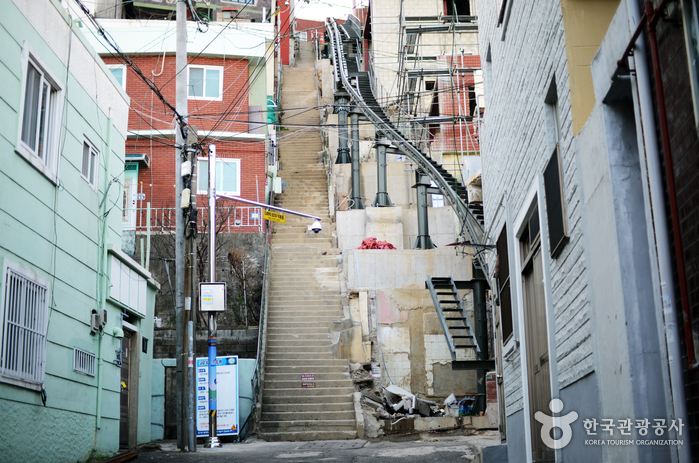
The official image above shows the historic stairs with the former monorail infrastructure. The current transport beside the steps is the Choryang 168 Skyway, an inclined elevator installed after the old system was removed for safety reasons. The stairs themselves remain free and open as part of a hillside neighborhood. This guide explains the current route, lift situation, difficulty, views, and how to visit without disturbing residents.
Busan Station to 168 Stairs at a glance
- Best starting point: Busan Metro Station Exit 5
- Walking distance: about 758 meters to the Choryang Ibagu-gil area
- Typical approach time: roughly 10–15 minutes
- Stairs: 168 steep steps, approximately six stories high
- Old monorail: removed
- Current alternative: Choryang 168 Skyway inclined lift, operating since March 2025
- Admission: free
- Address: 9 Yeongcho-gil 197beon-gil, Dong-gu, Busan
- Korean names: 168계단 / 초량168하늘길
Small hillside lanes can be confusing even at close range. Save both Korean names and use live navigation from my Korea travel apps guide.
Step-by-step walking route from Busan Station
1. Start from the Busan Station side facing Choryang
If you arrive by KTX, cross toward the city and locate the metro-station exits. Official Visit Busan directions place Choryang Ibagu-gil about 758 meters from Exit 5. The route heads away from the port and toward the hillside behind the station.
2. Follow signs for Choryang Ibagu-gil
Search 초량 이바구길 or 168계단. “Ibagu” means “story” in the Busan dialect. The route passes old buildings and story markers before reaching the base of the steep stairway.
3. Arrive at the bottom of the 168 Stairs
The stairs rise sharply between homes. You can climb the steps, use the inclined lift when operating, or combine both by riding up and walking down. Do not assume the lift is guaranteed at every hour; maintenance, inspections, weather, or operating schedules can affect service.
If you have luggage, stop before beginning. A suitcase is difficult on the slopes, steps, and small lift. Use my Busan Station luggage storage guide.
Important update: the monorail is gone
Older blogs, maps, and even some tourism pages still tell visitors to take the 168 Stairs monorail. That information is outdated. The small monorail stopped after safety problems, was removed, and was replaced with a larger inclined elevator.
Busan Dong-gu’s current official information says the new inclined lift began operation in March 2025. Its public name is Choryang 168 Skyway. It follows the steep slope beside the stairs and provides an easier route for residents and visitors.
Search for 초량168하늘길 if a map still shows the old monorail name. Because current official English pages have not consistently updated every reference, trust the local Korean district notice over older travel articles.
Should you climb or use the lift?
Climb the stairs if:
- You are comfortable with a steep six-story ascent
- The weather is cool and dry
- You want to experience the historic route directly
- You can use stairs safely without support
Use the inclined lift if:
- You have limited mobility or knee pain
- You are traveling with young children
- Summer heat makes the climb unsafe
- You want to ride up and descend slowly on foot
The lift improves access but does not make the entire hillside route perfectly step-free. Connecting alleys, viewpoints, and older buildings may still have slopes, thresholds, or stairs.
How difficult is the 168 Stairs walk?
The 168 steps are steep and exposed. A fit traveler can climb them in a few minutes, but the full approach from Busan Station adds uphill streets. Take breaks at landings and avoid racing for a video.
In summer, visit early morning or late afternoon and bring water. In winter, shaded steps can feel colder and may be slippery after precipitation. Rain makes both the stone and surrounding painted surfaces less secure, so shoes with grip matter.
What is Choryang Ibagu-gil?
Choryang’s hillside expanded as migrants and Korean War refugees settled above the port and railway district. The stairs provided a direct connection between homes on the hill and jobs, schools, markets, and transport below.
Ibagu-gil turns this local history into a walking route with story panels, viewpoints, old structures, and community spaces. The 168 Stairs are the best-known section, but the broader neighborhood gives the visit meaning.
This is a lived-in residential area, not an open-air movie set. Keep voices low, do not photograph through windows, and never block a doorway or resident using the lift.
How long should you allow?
Allow 40–60 minutes for the station-to-stairs walk, one ride or climb, and basic photographs. Plan 1.5–2 hours if you follow more of Ibagu-gil, stop at viewpoints, and read the historical displays.
Do not add the route immediately before a KTX departure. The return downhill is faster, but finding the route, waiting for the lift, and collecting luggage can take longer than expected.
Best time for views and photos
Late afternoon gives softer light over Busan Port, while evening brings city lights. However, indoor community spaces and the inclined lift may not share the outdoor stairs’ open access. If the lift is essential, verify same-day operation before planning a night visit.
The best photographs are often from the upper streets looking toward the port, not only from the bottom of the staircase. Stay on public paths and keep private homes out of close-up shots.
What to combine with the 168 Stairs
Busan Station Chinatown
The Chinatown and Texas Street area sits near the station and works before or after the hill. This is the easiest food stop without crossing the city.
40 Steps Cultural Street
For a history-focused day, take Line 1 one stop south to Jungang after returning to Busan Station. My Busan Station to 40 Steps guide explains its refugee history and Culture Hall schedule.
Old downtown Nampo
Continue on Line 1 to Nampo or Jagalchi for markets, food, and Yongdusan Park. Do this after the hillside walk so shopping bags do not make the stairs harder.
A practical arrival-day itinerary
- Arrive at Busan Station and store large luggage.
- Walk from Exit 5 toward Choryang Ibagu-gil.
- Ride the inclined lift or climb the 168 Stairs.
- Explore one or two upper viewpoints.
- Return downhill to Busan Station.
- Eat nearby or take Line 1 to Nampo for the evening.
This works well before hotel check-in because it begins beside the railway station and requires no extra bus or metro fare.
Common mistakes to avoid
- Searching for the old monorail and assuming it still operates
- Carrying a suitcase onto the hillside route
- Underestimating the steep approach before the stairs
- Assuming the inclined lift runs at every hour without interruption
- Blocking residents or photographing private homes
- Attempting the climb in slippery shoes after rain
FAQ: Busan Station to 168 Stairs
How far are the 168 Stairs from Busan Station?
The Choryang Ibagu-gil area is about 758 meters from Busan Metro Exit 5. Allow roughly 10–15 minutes uphill.
Is the 168 Stairs monorail still running?
No. The old monorail was removed. A new inclined elevator called Choryang 168 Skyway began operating in March 2025.
Is the inclined lift free?
It was installed as a public access facility for residents and visitors. Check current local notices for operating times or temporary maintenance.
Do I have to climb all 168 steps?
No. Use the inclined lift when it is operating, or ride up and walk down part of the route.
Is the 168 Stairs route open at night?
The outdoor stairs and lanes are public, but the lift and indoor facilities can have separate hours. Verify operation if you depend on the lift.
Can I visit with luggage?
It is strongly discouraged. Store large bags at Busan Station before walking through the narrow, steep neighborhood.
Local takeaway: Walk from Busan Metro Exit 5, not across the city. Ignore old monorail instructions, look for Choryang 168 Skyway, and treat the hillside as a residential history walk rather than a quick photo prop.


댓글
댓글 쓰기